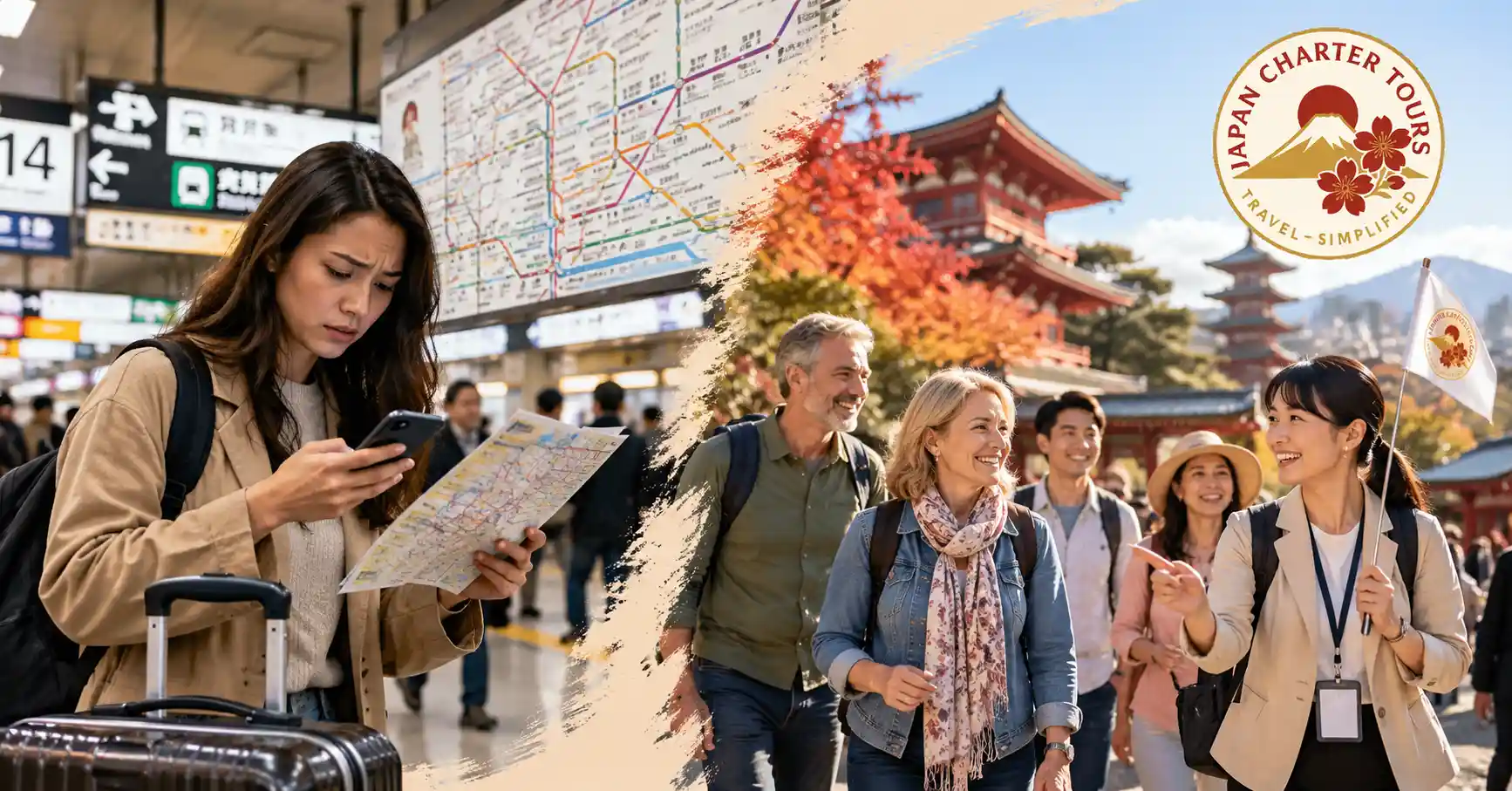
You don’t need a guide to travel Japan. It’s safe, clean, and signposted in English in the main tourist strips, and thousands of Australians do it independently every year. The real question isn’t whether you can find your way. It’s whether you want to spend the trip finding it: working out which exit gets you out of Shinjuku Station, translating a menu in a town with no English signage, deciding where to eat before decision fatigue sets in. That’s the honest trade-off between self-guided Japan and travelling with a private guide: experiencing the country, or managing it.
Here’s what each style really involves, so you can pick the one that fits your group.
Can You Do Japan Without a Guide?
Yes. Japan is one of the easiest countries in Asia to travel independently. Trains run on time, cities are safe at night, and convenience stores solve half of travel’s daily problems. Solo travellers and confident couples do it brilliantly.
But easy to travel is not the same as easy to navigate. Japan rewards preparation before you fly, and it demands problem-solving after you land, station by station and meal by meal. That daily grind is where self-guided trips quietly become a second job, not just the booking spreadsheet beforehand.
What Does Self-Guiding Actually Involve?
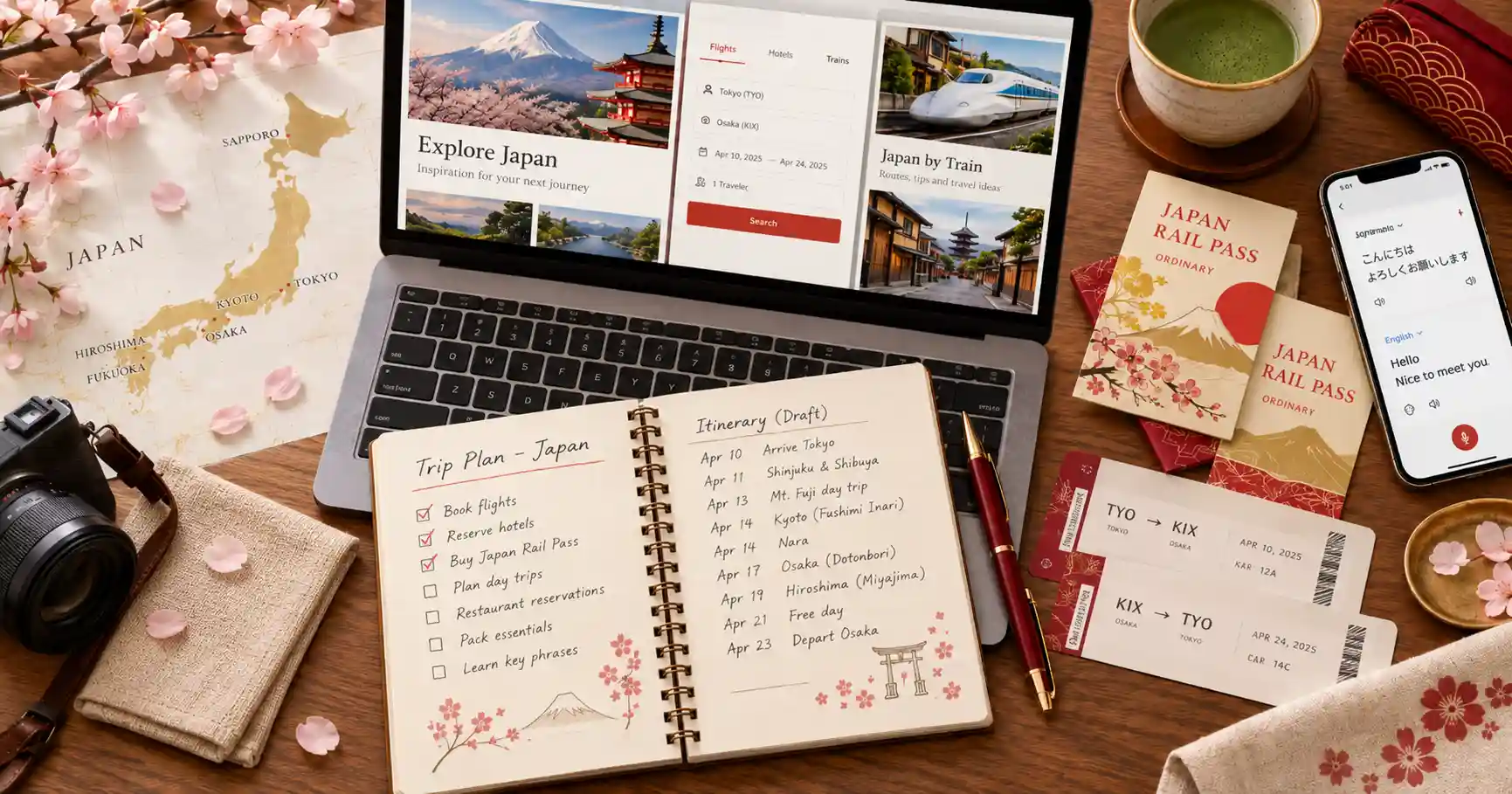
The workload starts months before you fly. According to The Navigatio’s Japan booking guide, popular restaurants can book out up to six months ahead, and sought-after cultural activities and attractions need reserving one to three months in advance. On the trip itself, the list looks like this:
- Researching and booking every hotel, in every city, with luggage logistics between them.
- Working out rail passes, seat reservations, and which Shinkansen to catch.
- Reserving timed-entry attractions before they sell out, often months ahead.
- Finding restaurants that suit your group each day, and booking the good ones early.
- Navigating, translating, and problem-solving on the ground, every single day.
The in-country logistics are the part people underestimate. Japan’s major stations, Tokyo, Shinjuku and Osaka among them, can have dozens of exits and several operators sharing the same platforms, so taking the wrong exit after a long-haul flight can turn a ten-minute transfer into forty. Step outside the main tourist strips and English signage, menus and staff thin out fast, so every transfer, order and set of directions becomes a small negotiation.
Some travellers love this. Planning is part of the holiday for them, and that’s a perfectly good reason to self-guide. Our beginner’s guide to Japan helps with exactly that, and our post on the mistakes travellers make in Japan covers the traps first-timers fall into.
For everyone else, twenty-plus hours of research plus a daily logistics job on the ground is a steep price for freedom you can keep anyway. Which brings us to the alternative.
What Does a Private Guide Change?
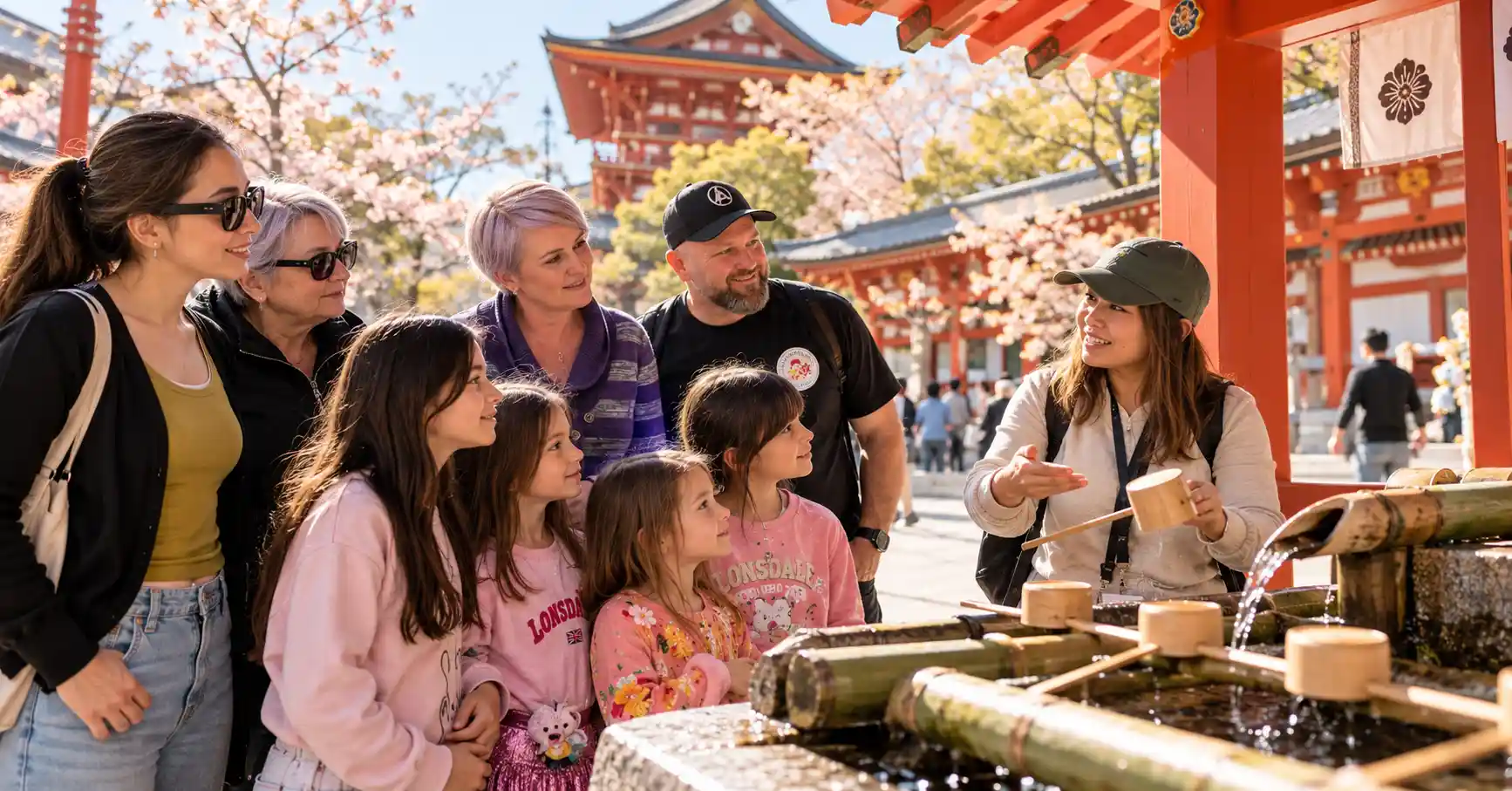
More than the booking headache. A private guide changes what actually happens each day of the trip.
The stations stop being a problem. No working out which of Shinjuku’s dozen-plus exits gets you closest, no guessing the right platform, no re-checking a transfer with tired kids and a suitcase in tow. Someone who already knows the way is doing it for you.
The language barrier disappears. Once you’re past the main tourist areas, English-speaking staff, English menus and English signage get rarer than most first-time visitors expect. On our private charter tours, an English-speaking guide handles the ordering, the directions and the transfers, so nobody in your group is standing at a counter trying to mime what they want.
The decisions stop piling up. Self-guiding means dozens of small decisions a day: where to eat, how to get there, whether you’re on the right train, what to do if the plan falls over. A guide absorbs almost all of it, which is the difference between arriving at dinner and arriving at dinner exhausted.
Local knowledge replaces guesswork. A guide knows the quiet noodle bar two streets back, the shrine that empties out by four, the seasonal event that never makes it onto a tourist itinerary. You can read about Fushimi Inari online; you can’t Google what a guide notices your group would love and quietly adds to the day.
The freedom stays. This is the part travellers get wrong about guided travel. A private guide isn’t a coach-tour timetable. The group wants longer at the temple? Stay. Kids melting down? Reshuffle the afternoon.
None of this is really about hours saved on planning. It’s about what’s actually got your attention once you’re there: a platform board, or Mount Fuji going past the window. That’s the real difference between the two styles, and it’s worth being honest with yourself about which one you’d choose on day three of the trip, not day one.
How Do the Two Styles Compare?
| Factor | Self-guided | Private guide |
|---|---|---|
| Planning workload | 20+ hours before, ongoing daily | Effectively none |
| Advance bookings | Yours to research and win | Arranged for you |
| Daily decision load | Constant: navigating, translating, deciding | Minimal: the guide manages it |
| Flexibility on the day | Total | High: the guide adjusts around your group |
| Local context | What you read beforehand | Expert, live, personalised |
| Language and navigation | Your phone and patience | Handled |
| Cost per person | Lowest for solos and couples | Falls sharply as group size grows |
| Best for | Confident travellers who enjoy planning | Groups of 8+, families, first-timers |
What Does Each Option Cost?
Self-guiding is the cheaper option for one or two people, since there’s no group day rate to pay. That gap narrows fast as your group grows past six or eight. We’ve run the full numbers, DIY costs versus a private tour price, in our breakdown of whether a private Japan tour is worth it, including exactly where self-guiding still comes out ahead.
Which Style Suits Your Group?
Self-guided suits solo travellers and couples who enjoy the research, the kind of traveller who finds an evening on Tabelog genuinely fun. A private guide suits the opposite: family groups, first-timers, anyone who’d rather spend the trip experiencing Japan than managing it. Nobody wants to be the one reading train boards and translating menus while the rest of the group just wants dinner.
Browse our upcoming trips to see what a fully arranged private itinerary looks like, or get in touch and we’ll tell you straight whether your group is better off booking or building it themselves.
Frequently Asked Questions
Do you need a guide to visit Japan?
No. Japan is safe, well signposted and very doable independently. Where a guide earns its keep is with groups, families and first-timers who want local context without the planning load. It comes down to travel style, not necessity.
Is it hard to plan a Japan trip yourself?
Yes, if you want it done properly. Restaurants can book out six months ahead. Timed-entry attractions want one to three months’ notice. Hotels, rail passes, daily routes, all yours to sort. Fine if you enjoy planning. A second job if you don’t.
Does English make self-guided travel easy in Japan?
Around central Tokyo, Kyoto and Osaka, mostly. Step outside the tourist strips and it thins out fast: menus, signage, station announcements, often Japanese only. That’s exactly the gap a guide’s translation fills.
How much does a private guide cost in Japan?
¥60,000 to ¥80,000 a day for the whole group in Tokyo, roughly $545 to $730 AUD. Split across eight people, that’s under $95 each, since guides charge by the group, not the head.
Can you still have freedom on a guided tour?
On a private tour, yes. It isn’t a coach timetable. Stops, timings and meals move around your group, sometimes on the same day, and you keep the flexibility of going it alone without doing the navigating yourself.
What’s the biggest downside of self-guided travel in Japan?
The daily workload. Stations, menus, luggage between cities, keeping everyone organised, it all falls on one or two people, and they spend the holiday managing it rather than enjoying it. Miss the booking window on the popular spots and you feel that too.