Nearly 200,000 Australians arrived in Japan across March and April 2026, right through cherry blossom season, according to preliminary figures from the Japan National Tourism Organization. Want to join them next spring?
No official 2027 cherry blossom forecast exists yet. Japan Meteorological Agency averages for 1991 to 2020 put full bloom around 31 March in Tokyo and 4 April in Kyoto and Osaka. Pick travel dates around those averages now, then watch for the first forecasts, expected from mid-December 2026.
That gap between booking and forecasting shapes everything else. This guide covers bloom averages by city, when the forecasts arrive, a booking timeline built for Australians, and what peak week feels like on the ground.
When will the cherry blossoms bloom in Japan in 2027?
Expect full bloom in Tokyo, Kyoto and Osaka between late March and early April 2027. That’s the honest planning window until forecasts appear.
The Japan Meteorological Agency (JMA) records bloom dates by watching one official Somei Yoshino sample tree in each city. Tokyo’s tree stands in the grounds of Yasukuni Shrine. These are the numbers worth planning around.
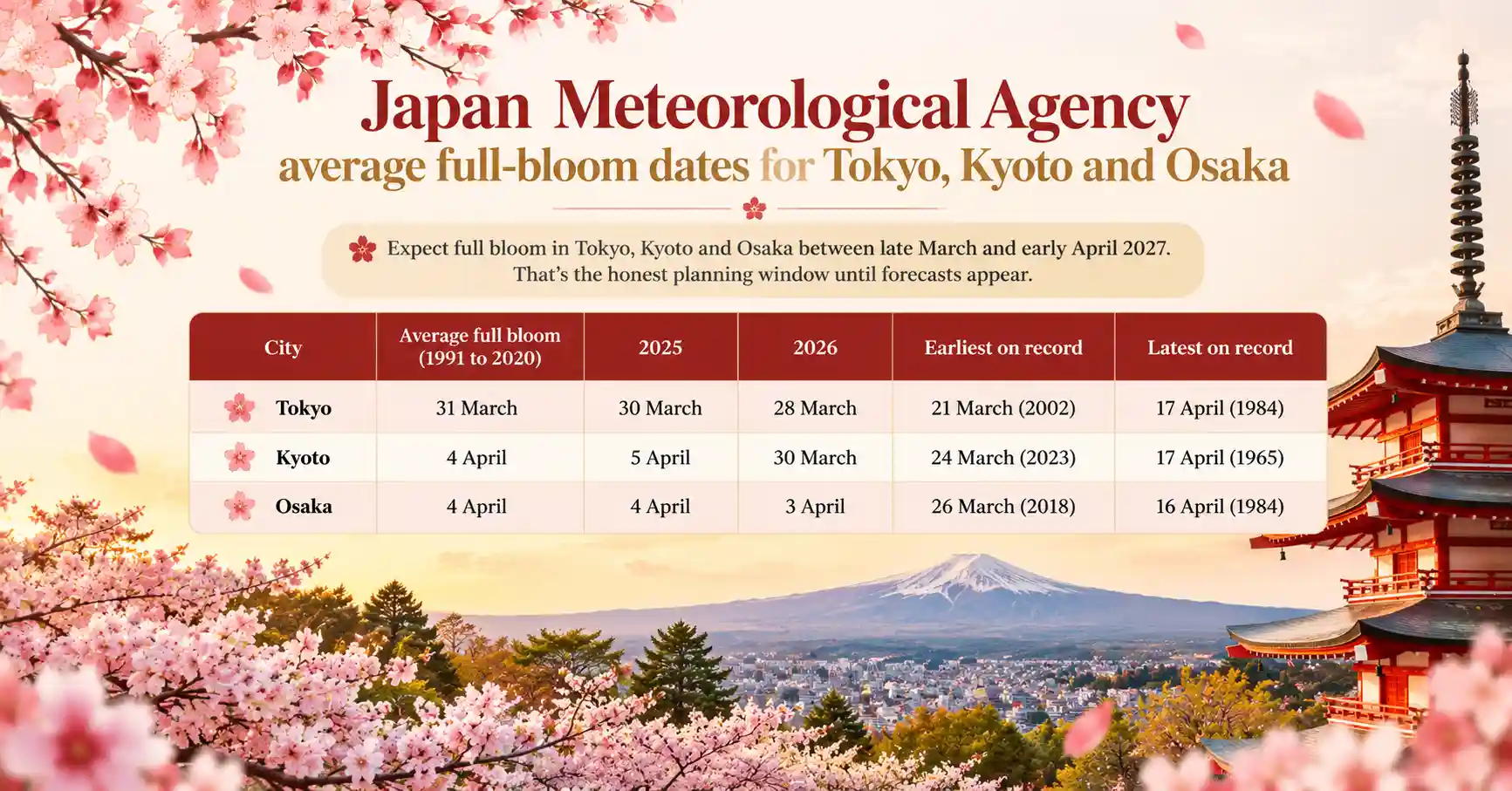
Somei Yoshino full-bloom dates by city
| City | Average Full Bloom (1991–2020) | 2025 | 2026 | Earliest on Record | Latest on Record |
|---|---|---|---|---|---|
| Tokyo | 31 March | 30 March | 28 March | 21 March (2002) | 17 April (1984) |
| Kyoto | 4 April | 5 April | 30 March | 24 March (2023) | 17 April (1965) |
| Osaka | 4 April | 4 April | 3 April | 26 March (2018) | 16 April (1984) |
Source: Japan Meteorological Agency full-bloom records for Tokyo, Kyoto and Osaka, last checked 13 October 2026. Full bloom means about 80% of flowers on the sample tree are open.
Look at the spread. Between 2016 and 2025, Tokyo’s full bloom landed anywhere from 22 March to 4 April. A swing of nearly two weeks is normal, not a freak year.
Kyoto and Osaka run about four days behind Tokyo on average. That suits a Tokyo-to-Osaka route, because the blossom moves west roughly when you do. Our private Spring Season Tour follows that path: Tokyo, then Hakone, then the bullet train to Osaka with a day in Kyoto. Hakone sits in the hills and JMA keeps no sample-tree average for it, so we’ve left it out of the table rather than guess.
A few extra days in the capital on your list? Our Tokyo travel guide covers the best areas, sights and getting around.
When does the 2027 cherry blossom forecast come out?
JMA records the official dates. The forecasts come from private weather companies, including the Japan Meteorological Corporation (JMC), Weathernews and the Japan Weather Association.
Last season, the first forecasts arrived over about six weeks. JMC went first on 18 December 2025, after adding AI-based long-range modelling that let it publish a month earlier than usual. Weathernews followed on 8 January 2026 and the Japan Weather Association on 29 January. From there, updates came roughly weekly as the bloom moved north.
As of 13 October 2026, the Japan Meteorological Corporation forecast page still shows its 2026 season forecast. No 2027 numbers exist anywhere yet. Any site quoting 2027 bloom dates today is quoting averages or a guess.
What’s the difference between first bloom and full bloom?
First bloom (kaika) is the day five or six flowers open on the sample tree. Full bloom (mankai) is the day about 80% are open. In Tokyo in 2026, JMA recorded first bloom on 19 March and full bloom on 28 March, nine days apart.
Plan around full bloom. A trip timed to first bloom can arrive to trees still mostly in bud.
When should Australians book a cherry blossom trip for 2027?
Book on the averages, and do it soon. It sounds sensible to wait for the forecast. The timing doesn’t work.
Australians planning a late-March or early-April 2027 trip have to commit before any forecast exists. As a rule of thumb, book blossom-peak flights five to seven months out. The first 2027 forecasts should land between mid-December and late January, so base your dates on Japan Meteorological Agency averages instead.
Here’s a timeline for a late-March or early-April 2027 private tour. Treat it as a guide, not a rulebook.
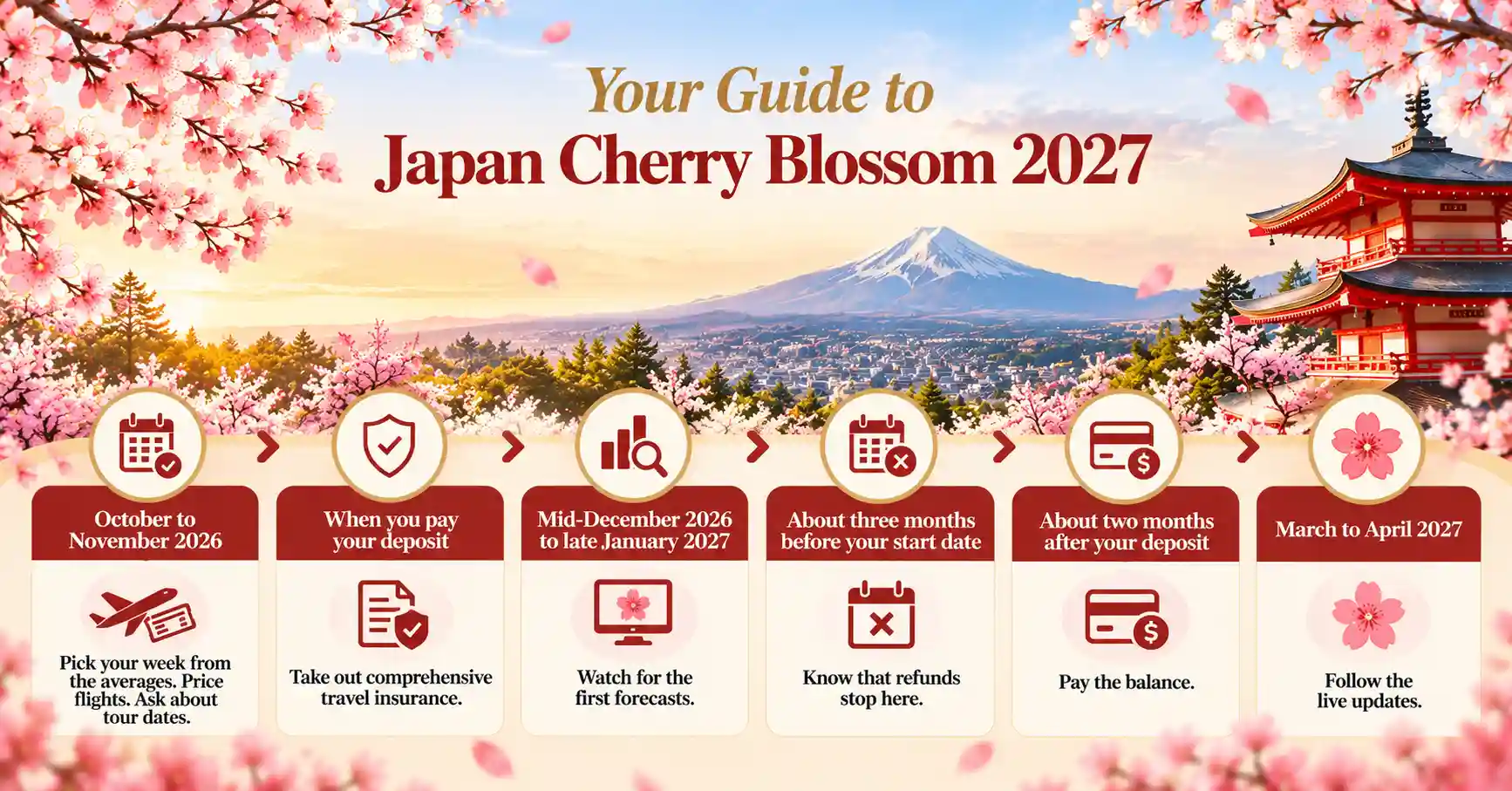
2027 cherry blossom booking timeline (a guide)
| When | What to do | Why |
|---|---|---|
| October to November 2026 | Pick your week based on historical averages. Price flights and ask about tour dates. | Booking flights five to seven months ahead is a usual rule of thumb for blossom-peak travel, but it is not a guarantee. |
| When you pay your deposit | Take out comprehensive travel insurance. | Japan Charter Tours recommends insurance at booking. Cancellations made between three and six months before the start date receive a 50% refund. A late-March 2027 start date is already within that window. |
| Mid-December 2026 to late January 2027 | Watch for the first forecasts. | This is when the first meaningful 2027 forecast data is expected. Forecasts may be revised weekly. |
| About three months before your start date | Be aware of the non-refundable cancellation deadline. | Bookings cancelled within three months of the start date are non-refundable. For a late-March start, this falls in late December. |
| About two months after your deposit | Pay the remaining balance. | Full payment is generally due two months after the deposit. |
| March to April 2027 | Follow the live updates. | Small itinerary adjustments may be possible, depending on feasibility. |
Spot the clash? The first forecast and the end of refunds arrive at roughly the same time. By the time real 2027 data exists, most people have already committed. That’s why the averages matter, and why insurance is worth sorting on day one. (Japan Charter Tours counts the start date as the day your guide first makes contact with your group.)
No one can promise blossom, either. As our tour FAQ explains, nature varies every year, so we travel in the best seasonal window but can’t guarantee specific viewing.
You can check the itinerary, inclusions and availability on the Spring Season Tour booking page.
How busy is Japan during cherry blossom season?
Busy. The pressure shows up in the same places every time: stations, famous parks and restaurants.
Japan’s Tourism Agency asks departing visitors what went wrong on their trip. Its latest survey of 4,110 visitors, run at five airports from November 2025 to January 2026, found:
- Language: 15.4% struggled to communicate with staff, most often in restaurants (38%) and railway stations or bus terminals (27%).
- Crowds: 12.9% struggled with crowds. Visitors who stayed only in cities reported it far more than those who stayed only in regional areas (14% against 6%).
- Transport: 11.3% struggled with public transport. In cities, most trouble came from trains other than the bullet train (73%). The top problems were finding a route (45%) and finding where to board or get off (38%).
The survey ran outside blossom season, so treat it as a baseline. Our guides see the same pinch points get busier during peak bloom.
One more thing to watch. Yokohama, next door to Tokyo, hosts the GREEN×EXPO 2027 horticultural expo from 19 March to 26 September 2027, overlapping sakura season. Nobody knows yet how much it will add to spring crowds.
What’s the difference between managing Japan and experiencing Japan?
It comes down to who solves the problems. Manage Japan yourself and your holiday fills up with them. Experience it with a guide and someone else handles them while you look up at the trees.
Here’s the same blossom day, two ways. This is an illustrative scenario, not a real guest’s story.
The managed day
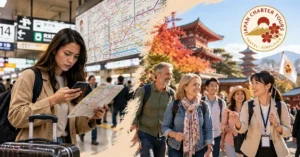
You landed yesterday after the long flight from Australia. This morning you head for Ueno Park, because every list says to. Ueno Station has several exits. Your map app points one way and the signs point another. The first exit you try puts you on the wrong side of the road.
The park is packed. Picnic tarps cover the ground under the best trees, and you shuffle down the main path with everyone else, phone held high.
By noon the group is hungry. The restaurant you pick has no English menu. You point at a photo and hope.
Then the questions start again. Where next? Which line? Is this the right train? By mid-afternoon you’ve seen some lovely trees and spent half the day making decisions.
The experienced day
Same city, same week. Your guide knows where the blossom is just as good but the crowds are thinner, and what time of day to get there.
The coach is waiting when you walk out. Lunch is somewhere the guide already knows, and they order in Japanese. Nobody in your group opens a map app all day. Grandparents get a seat. Kids get a run around.
You still see Japan’s famous blossom. You just stop running the trip and start enjoying it.
Why the difference adds up
Stations come first. Big stations have many exits and long transfers, and they’re hardest right after a long flight, or with children and luggage. On our Spring Season Tour, your guide meets you at the airport and rides public transport with you to the first hotel. On transfer day, they walk the group through Tokyo Station and onto the bullet train to Osaka. Most other days, your private coach does the work.
Language is next. English is common around the big sights, but our guides find it thins out quickly once you step away from them. The Tourism Agency figures point the same way: restaurants and stations top the list of places visitors struggle to communicate. A guide who speaks Japanese turns those moments into easy conversations.
Time is the one people underestimate. A guide saves holiday hours in Japan, not just planning hours at home. You spend less time on platforms, directions and queues, and more time under the trees. In a season this short, those hours count.
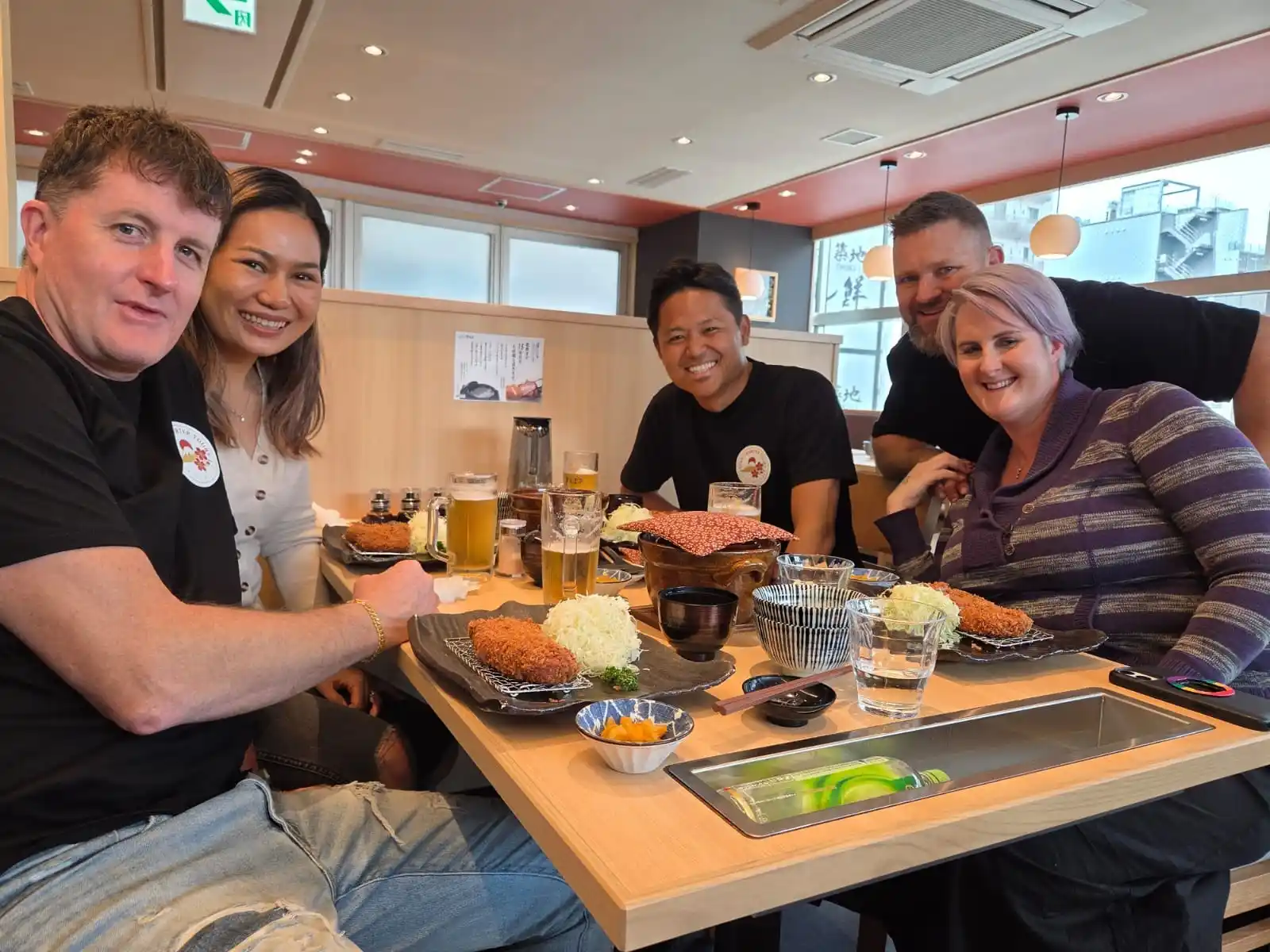
Local knowledge matters more in spring than at any other time. Guides know the quieter viewing spots, the seasonal events and the small restaurants most visitors walk straight past.
Then there’s decision fatigue, which sneaks up on people. Which exit? Lunch here or over there? Did we just miss our stop? All those small calls add up before lunch, even on holiday. Hand them to someone who already knows the answers and the whole group can switch off for a bit.
One note on the itinerary. Day 6 in Osaka is a free day with no guide. Ask your guide beforehand and they’ll suggest ideas, or arrange something like a tea ceremony or a river cruise.
Got the family, or a few friends, in mind for next spring? Send us your group size and rough dates and we’ll check what’s free for 2027. Send an enquiry or ring 1800 955 822. We’re Australian owned and run, based in Cairns in Far North Queensland.
Is a private charter tour right for your group in sakura season?
Lots of Australians do sakura season on their own and love every minute. Solo planning suits people who like a bit of trial and error and don’t mind a wrong turn or two.
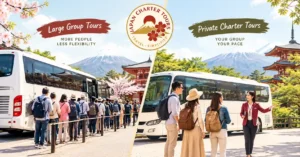
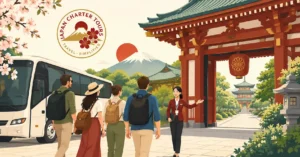
Our private charter tours for groups are built for something else. They’re designed for groups of 8 or more: extended families, a few couples who travel together, a club or a work group. You get your own coach and your own guide. Nobody else rides along.
Mixed-age groups get the most out of it. Picture a grandparent who doesn’t want to haul a suitcase up station stairs, a parent with a tired six-year-old, or a first-timer who’d rather see the highlights than research them.
What’s included: hotels with breakfast, lunch on most days, entry fees, private transport and an English-speaking guide. You book your own flights.
Couples can join too. We price tours for eight travellers, so couples often get better value by bringing family or friends along.
Frequently asked questions about Japan cherry blossom 2027
When is cherry blossom season in Japan in 2027?
Nobody knows yet, because no 2027 forecast exists. The averages are a good guide, though. JMA’s 1991 to 2020 records put full bloom near 31 March in Tokyo and 4 April in Kyoto and Osaka. Southern Japan flowers earlier and the north later, so blossom pops up somewhere from March right through to May.
When will the 2027 cherry blossom forecast be released?
Not from the Japan Meteorological Agency, which only records the dates. Private companies do the forecasting. For the 2026 season, the Japan Meteorological Corporation published first on 18 December 2025, with Weathernews and the Japan Weather Association following in January. Updates then came roughly weekly. So look for the first 2027 numbers from mid-December.
Are cherry blossoms guaranteed on a spring tour?
No. Nobody can promise it. The trees respond to autumn and winter temperatures, and those can’t be booked. We time spring tours for the usual window, but we can’t guarantee you’ll catch full bloom. For context, Tokyo’s full bloom has fallen anywhere between 22 March and 4 April over the last ten seasons.
What happens if the blossoms come early or late?
More often than you’d think. Tokyo hit full bloom on 22 March in 2023, then not until 4 April the following year. Kyoto and Osaka tend to trail Tokyo by about four days, so heading west buys you a second shot. Leave a spare day or two in your plans if you can.
How far ahead should Australians book a cherry blossom trip?
As soon as your dates are settled. Five to seven months ahead is the usual rule of thumb for blossom-peak flights, though it’s only a guide. For late March 2027, you’re already in that window. And don’t hold out for the forecast. It lands from mid-December, which is late to be locking in flights.
Is cherry blossom season busy with Australian travellers?
Very. JNTO counted 115,235 Australian arrivals in April 2025, a month that took in late blossom, Easter and school holidays. In 2027, Easter Sunday falls on 28 March, just three days before Tokyo’s average full bloom. So check your state’s school holiday dates early, before you pick a week.
Can a couple join a private charter tour?
Yes, though tours are designed for private groups of 8 or more. Smaller groups can join, but we price for eight travellers. Couples can make the trip better value by travelling with family or friends to fill the group. Contact Japan Charter Tours for a quote based on your group size.